
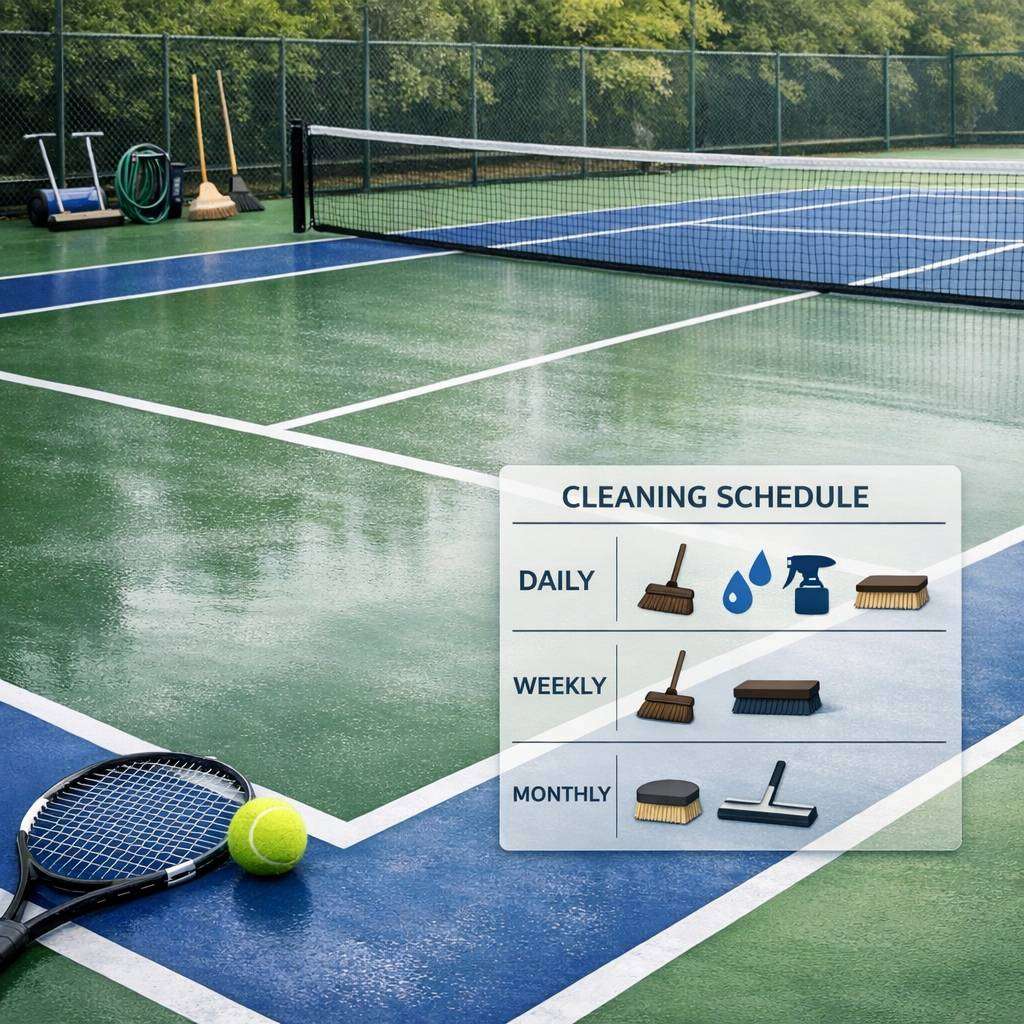
Tennis courts are high-traffic surfaces exposed to the elements, from rain and dew to dust, pollen, and spillages. Maintaining a clean surface not only extends the life of the court but also ensures consistent ball bounce and player safety. Whether you’re dealing with an artificial grass tennis court or a traditional hard surface, a well-planned cleaning routine is essential. In this post, we’ll outline practical cleaning schedules tailored to different court types and usage levels, with tips drawn from industry practice in tennis court maintenance.
Understanding the types of tennis court surfaces
Tennis court installation varies significantly, and the cleaning regime should reflect the material. Artificial grass tennis courts, often used for both training and matches, require maintenance that preserves the fibre integrity and surface evenness. Courts with tennis grass surfaces need decompaction and grooming to prevent matting and to maintain consistent ball bounce. Meanwhile, traditional hard court extenders demand debris removal, joint cleaning, and occasional resurfacing assessments. Each surface has unique vulnerabilities, so a one-size-fits-all approach can reduce the lifespan of the court.
Daily cleaning essentials
For all surfaces, a daily sweep or light blower can remove loose debris such as leaves, twigs, and dust. This reduces the risk of moss or algae forming in damp conditions and helps prevent staining. A quick inspection after heavy rain is advisable to identify standing water or pooling that could lead to surface damage. For artificial grass tennis court surfaces, a gentle rake or specialised grooming tool can lift flattened fibres and maintain an even playing surface. Avoid aggressive brushing on hard surfaces, which can degrade the finish over time.
Weekly cleaning routine
A weekly cycle should focus on deeper cleaning and surface assessment:
- Remove any stubborn debris that didn’t come up in the daily sweep, including seeds, pine needles, or ballast from nearby landscaping.
- For artificial grass tennis court surfaces, use a specialised infill brush to redistribute rubber or sand infill and to re-fluff the fibres. This helps maintain buoyant play and even bounce.
- Check for moss, algae, or mould, particularly in shaded or damp corners. Treat with appropriate tennis court cleaning products designed for synthetic grass or hard courts, following manufacturer instructions.
- Inspect drainage channels and around edges. Blockages can cause water to stand and accelerate wear.
- Inspect lines and court markings for wear. Repaint or refresh as necessary to maintain clear play zones.
Tennis court cleaning is essential for preserving surface integrity, safety, and playability. Regular maintenance prevents algae, mildew, and staining from affecting traction and bounce. For reliable results, professional cleaning uses specialized equipment and eco-friendly solutions. By scheduling routine court cleaning, you can extend surface life and enhance aesthetics. For convenient services, visit https://www.preferredsoftwash.com/residential-services/tennis-court-cleaning/ to learn more about options and pricing.
Tennis court cleaning is essential for preserving grip, surface integrity, and longevity of your court. Regular debris removal and gentle maintenance prevent staining and hazards. For professional upkeep, visit https://www.artificialgrassmaintenance.co.uk and explore trusted services and tips to keep your court safe and attractive.
Monthly maintenance targets
Month-end checks should align with seasonal changes and court utilisation. Focus areas include:
- Deep clean to remove embedded dirt in joints and surface textures. For artificial grass tennis court installations, consider a more thorough grooming cycle to reset fibre direction and restore surface evenness.
- Inspect the overall surface for wear patterns, divots, or uneven patches. Minor irregularities can often be remedied through resurfacing or targeted repairs, depending on the surface type.
- Examine fencing, nets, and posts for damage. While not cleaning per se, these elements impact court usability and safety.
Seasonal and quarterly scheduling
Seasonal shifts influence how often you should schedule more intensive tasks. A practical approach is to align higher-intensity maintenance with seasonal weather patterns and tournament calendars.
- Spring: After winter, perform a comprehensive inspection, remove debris accumulated over the colder months, and re-seal or re-coat joints if required. For tennis court artificial grass, this is a good time to perform a thorough grooming and check for fibre wear.
- Summer: Peak use may necessitate more frequent brushing on artificial grass surfaces to maintain fibre alignment as play increases. Ensure drainage remains clear to prevent puddling after storms.
- Autumn: Leaves and rain increase debris. Increase sweeps and cleanings to prevent staining and moss formation, especially in shaded areas.
- Winter: In cooler climates, moss and algae growth can accelerate with moisture. Short, frequent cleaning cycles help keep surfaces protected and reduce the risk of slip hazards.
Tennis court cleaning schedules by surface type
- Artificial grass tennis court: Clean regularly to maintain fibre alignment and infill distribution. Weekly grooming, with periodic deep cleans and infill checks, can significantly extend tennis grass court maintenance cycles. Pay particular attention to drainage, infill levels, and edge wear.
- Tennis court artificial grass: Similar to the above, with emphasis on brushing to prevent matting and to keep a consistent playing surface. Investigate wear patterns that might indicate the need for tennis court resurfacing in the longer term.
- Hard court: Regular debris removal, pressure washing suitable for polymer resins, and attention to edge joints and cracks. Periodic resealing or resurfacing may be required to maintain a smooth, uniform playing surface.
- Mixed or hybrid surfaces: Follow manufacturer guidelines for cleaning agents and temperature limits to avoid any compromise of the surface integrity.
When to call in professionals
Some tasks require expert intervention. Signs you should seek professional help include:
- Persistent algae growth that resists standard cleaning.
- Cracks, spalling, or significant surface deterioration that affects play or safety.
- Wear patterns on artificial grass tennis court surfaces that indicate infill migration or fibre damage.
- Signs that a tennis court resurfacing or tennis court repairs are overdue or imminent.
Professional teams can advise on regrading, new infill installation, resealing, or full tennis court resurfacing if needed. They can also provide guidance on the most appropriate tennis court installation and ongoing maintenance plan for your facility.
Tennis court cleaning is essential for maintaining playability, safety, and surface longevity. Regular debris removal, power washing, and proper staining or sealing help preserve grip and prevent slippery areas. Professionals recommend a routine schedule that fits the court material, climate, and usage level, ensuring cracks are addressed promptly and nets remain taut. For trusted maintenance solutions and expert guidance, visit the following resource in the second half: https://www.gamesetmatchinc.com/court-maintenance.
Tennis court cleaning is essential for safe, consistent play and to extend surface life. Regular debris removal, pressure washing, and surface treatments reduce slip risks and preserve color. For best results, consult reputable methods and schedules, ensuring proper drying between steps. This quick tutorial offers practical tips and demonstrations to help maintain courts year-round. https://m.youtube.com/watch?v=ceSjm1lzBOM Following these guidelines can improve footing, bounce, and durability, making court cleaning efficient and cost-effective.
Practical tips to extend life and performance
- Use purpose-built cleaning products appropriate for your surface type; avoid harsh chemicals that can degrade materials or alter infill composition.
- Schedule maintenance around high-use periods to minimise disruption to play.
- Document every cleaning session, noting weather conditions, debris types, and any surface changes. This helps track wear and plan for maintenance windows.
- Train staff and club members in proper cleaning techniques to preserve surface integrity and prevent accidental damage.
By keeping on top of regular cleaning and routine inspections, you’ll maximise the performance and longevity of your courts. A thoughtful schedule—balanced with expert input when needed—helps protect your investment in tennis court installation and ongoing maintenance, including tennis court repairs and tennis court resurfacing when required.