
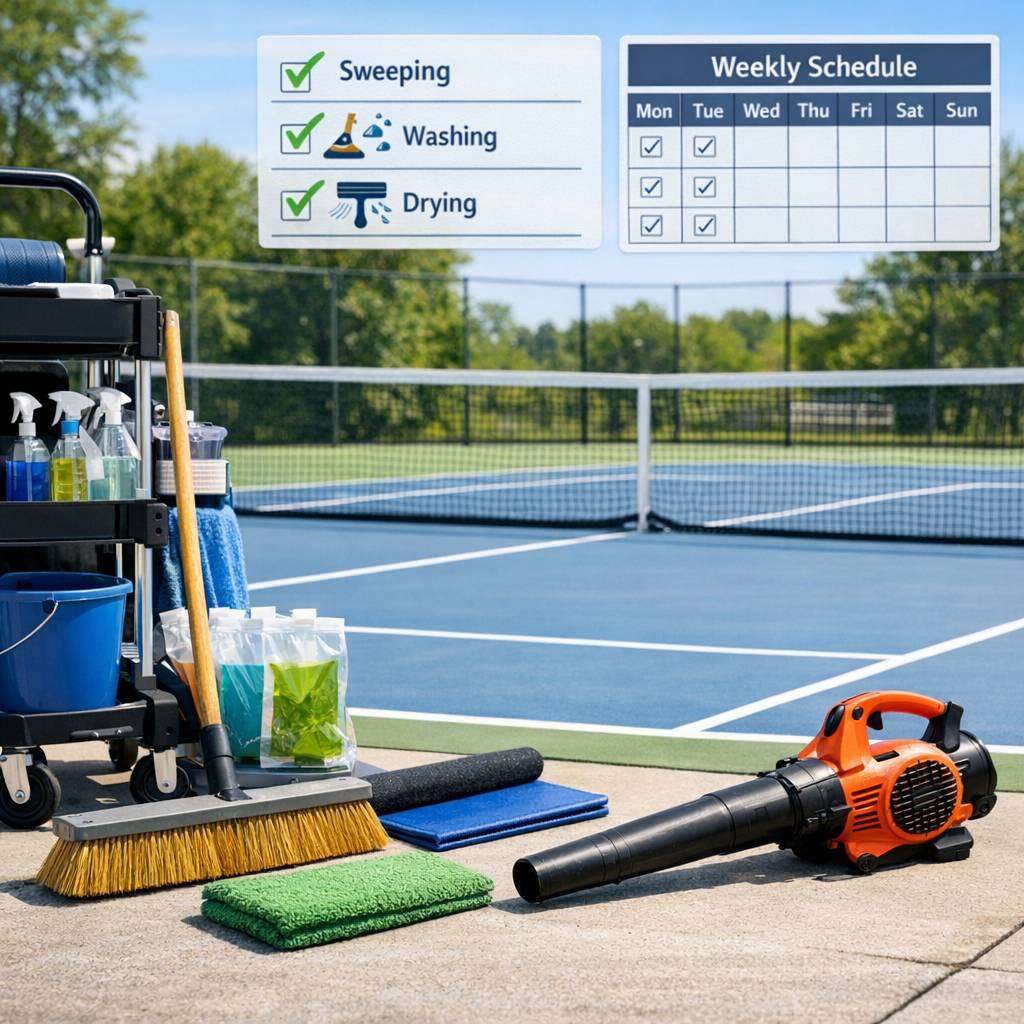
Maintaining a pristine tennis court is essential for performance, safety, and longevity. Whether you are overseeing a professional facility, a school, or a private court, a well-planned cleaning regime protects the surface, reduces wear, and enhances playability. This guide covers effective techniques, the right tools, and practical schedules tailored for diverse surfaces, including artificial grass tennis courts and traditional hard surfaces.
Understanding surfaces and their cleaning needs
Tennis courts can be built from a variety of materials, and each requires specific maintenance considerations:
- Artificial grass tennis courts: These are popular for their forgiving play, but they attract debris, moss, and algae if not cleaned regularly. Grooming and brushing are essential to keep the pile upright and the seams intact.
- Grass courts (natural or artificial grass variants): Regular debris removal prevents matting and keeps the surface level. For artificial grass tennis court installations, brushing and infill checks maintain bounce and drainage.
- Hard courts: Commonly acrylic or concrete-based surfaces require sweeping and occasional power washing, with attention to line maintenance and resurfacing as needed.
- Hybrid or mixed surfaces: Combine cleaning strategies from multiple disciplines to preserve each component’s integrity.
Understanding your surface guides safe cleaning practices and helps you plan a durable tennis court maintenance programme.
Keep your facility pristine with professional tennis court cleaning that removes grime, mold, and debris efficiently. Regular maintenance extends surface life, enhances performance, and improves safety for players. https://gallobrospw.com/tennis-court-cleaning/
Daily, weekly, and seasonal cleaning routines
A structured schedule ensures consistent maintenance and early detection of problems.
-
Daily tasks
- Remove litter, leaves, and debris from the court surface and lines using a soft broom or leaf blower.
- Check for standing water after rain and broom dry any damp patches to prevent slippery areas.
- Inspect net posts, anchors, and boundary lines for wear.
-
Weekly tasks
- For artificial grass: use a specialised turf brush or drag brush to brush the surface in multiple directions, keeping the pile upright and evenly distributed.
- Remove moss or algae from shaded or damp areas with a non-abrasive cleaner suitable for artificial grass; avoid aggressive chemicals that may degrade fibres.
- Inspect the drainage system and clear any blockages to prevent pooling.
- Check court perimeter edging and fencing for damage and secure loose elements.
-
Seasonal tasks
- Deep cleaning and power washing where appropriate, ensuring equipment is compatible with the surface to avoid fibre damage.
- Restructure or refresh the infill on artificial grass tennis courts if required, ensuring even distribution for consistent ball bounce.
- Recolour and seal hard court surfaces if recommended by manufacturers, and refresh line repainting for accurate play.
Daily tasks
- Remove litter, leaves, and debris from the court surface and lines using a soft broom or leaf blower.
- Check for standing water after rain and broom dry any damp patches to prevent slippery areas.
- Inspect net posts, anchors, and boundary lines for wear.
Weekly tasks
- For artificial grass: use a specialised turf brush or drag brush to brush the surface in multiple directions, keeping the pile upright and evenly distributed.
- Remove moss or algae from shaded or damp areas with a non-abrasive cleaner suitable for artificial grass; avoid aggressive chemicals that may degrade fibres.
- Inspect the drainage system and clear any blockages to prevent pooling.
- Check court perimeter edging and fencing for damage and secure loose elements.
Seasonal tasks
- Deep cleaning and power washing where appropriate, ensuring equipment is compatible with the surface to avoid fibre damage.
- Restructure or refresh the infill on artificial grass tennis courts if required, ensuring even distribution for consistent ball bounce.
- Recolour and seal hard court surfaces if recommended by manufacturers, and refresh line repainting for accurate play.
Cleaning techniques by surface
-
Artificial grass tennis court
- Brushing: Use a powered or manual brush to lift fibres and maintain an upright pile. Brushing directions should alternate to prevent compaction.
- Debris management: Regularly clear leaves, seeds, and twigs; consider a magnetised roller for metallic debris in high-traffic areas.
- Infill and drainage: Periodically check infill levels; if an infill break occurs, replenish to recommended depths and ensure uniform distribution.
- Algae and mould: Use a mild, non-bleach cleaning solution rated for artificial grass; rinse thoroughly to avoid chemical residues that may impair play.
-
Tennis grass court maintenance
- Grooming: Regular grooming prevents matting and maintains a smooth surface. Use a fine-toothed rake or specialised grooming equipment.
- Lawn seeding and repairs: If the surface is grass-like, perform patch repairs as needed to maintain uniform texture and ball bounce.
- Irrigation: Monitor moisture levels; overwatering can degrade playability and encourage fungal growth.
-
Hard court cleaning (acrylic or composite)
- Sweeping: Daily sweeping keeps the surface free of debris that can cause abrasion or staining.
- Power washing: Periodic low-pressure washing can remove build-up, followed by a thorough rinse to prevent residue.
- Line maintenance: Clean lines with appropriate edge treatments and re-paint when worn to maintain visibility and rules compliance.
- Sealing and resurfacing: Engage specialists for resurfacing at manufacturer-recommended intervals to prevent cracks and delamination.
Artificial grass tennis court
- Brushing: Use a powered or manual brush to lift fibres and maintain an upright pile. Brushing directions should alternate to prevent compaction.
- Debris management: Regularly clear leaves, seeds, and twigs; consider a magnetised roller for metallic debris in high-traffic areas.
- Infill and drainage: Periodically check infill levels; if an infill break occurs, replenish to recommended depths and ensure uniform distribution.
- Algae and mould: Use a mild, non-bleach cleaning solution rated for artificial grass; rinse thoroughly to avoid chemical residues that may impair play.
Tennis grass court maintenance
- Grooming: Regular grooming prevents matting and maintains a smooth surface. Use a fine-toothed rake or specialised grooming equipment.
- Lawn seeding and repairs: If the surface is grass-like, perform patch repairs as needed to maintain uniform texture and ball bounce.
- Irrigation: Monitor moisture levels; overwatering can degrade playability and encourage fungal growth.
Hard court cleaning (acrylic or composite)
- Sweeping: Daily sweeping keeps the surface free of debris that can cause abrasion or staining.
- Power washing: Periodic low-pressure washing can remove build-up, followed by a thorough rinse to prevent residue.
- Line maintenance: Clean lines with appropriate edge treatments and re-paint when worn to maintain visibility and rules compliance.
- Sealing and resurfacing: Engage specialists for resurfacing at manufacturer-recommended intervals to prevent cracks and delamination.
Tennis court cleaning is essential for preserving playability and longevity. Regular debris removal, pressure washing, and surface inspections prevent slip hazards and surface wear. Professionals assess padding, nets, and lines to ensure optimal performance. By scheduling routine maintenance, you extend court life and enhance safety for players of all levels. For expert services and reliable guidance, visit this resource: https://www.artificialgrassmaintenance.co.uk.
Tools and equipment we recommend
- Brooms and brushes: Soft bristle or synthetic brushes suitable for the court surface.
- Leaf blowers: Quiet, low-dust models for bulk debris removal without surface damage.
- Grooming brushes for artificial grass: Rolling or motorised brushes to lift fibres.
- Power washer or pressure washer: Low-pressure settings for delicate surfaces; avoid high PSI on artificial grass or freshly laid surfaces.
- Infill management tools: For artificial grass, tools to check and adjust silica or rubber infill.
- Cleaning solutions: Mild, surfactant-based cleaners approved for the specific surface; avoid harsh solvents that can degrade materials.
- Sealing and line products: Surface sealants or line painters compatible with court types; follow manufacturer guidelines.
Tennis court cleaning demands reliable equipment and consistent routines to preserve surface integrity and playability. For professional-grade water sweeping, check this resource: https://www.tenniscourtsupply.com/water-brooms.html. A dedicated cleaning plan reduces stains, mold, and buildup, ensuring courts stay safe and attractive year-round. Regular maintenance matters.
Tennis court installation and long-term care
During tennis court installation, proper drainage design, sub-base preparation, and surface finishing set the stage for easier maintenance and longer life. A well-designed drainage system reduces standing water, minimising moss growth and surface deterioration. For artificial grass courts, correct infill depth and fibre height during installation ensure consistent play and easier maintenance. Post-installation, a pioneer maintenance schedule helps protect investment and reduces the need for extensive tennis court repairs later.
Troubleshooting and common issues
- Moss or algae growth: Increase cleaning frequency, especially in shaded areas; ensure adequate drainage and consider a surface-specific algaecide compatible with the material.
- Uneven bounce on artificial grass: Re-distribute infill and groom fibres; inspect for wear patterns that may require patching or resurfacing.
- Cracks on hard courts: Small cracks should be sealed promptly; larger issues may require resurfacing by professionals to restore safe play.
- Fading lines: Repaint or restore line markings as part of tennis court maintenance to comply with competition standards.
Scheduling for facilities management
- Create a dedicated calendar for each court based on usage, climate, and surface type.
- Assign responsibilities to trained staff or a trusted contractor with experience in tennis court cleaning and repairs.
- Record keeping: Maintain logs of cleaning activities, repairs, and resurfacing as a basis for warranty compliance and maintenance budgeting.
Cost considerations and professional involvement
Budgeting for tennis court cleaning depends on surface type, court size, and frequency of maintenance. For complex tasks such as tennis court repairs, line repainting, or resurfacing, engaging a specialist with proven experience in tennis court maintenance is prudent. They can provide a tailored plan of cleaning, repairs, and preventive measures, including recommendations for tennis court installation projects and ongoing tennis court maintenance programmes.
By adopting a disciplined cleaning regime and using the right tools, you can extend the life of your tennis court, preserve playing characteristics, and minimise the need for costly tennis court repairs. For owners of artificial grass tennis courts and tennis grass court maintenance, regular grooming and debris management are crucial to sustaining performance and safety.