
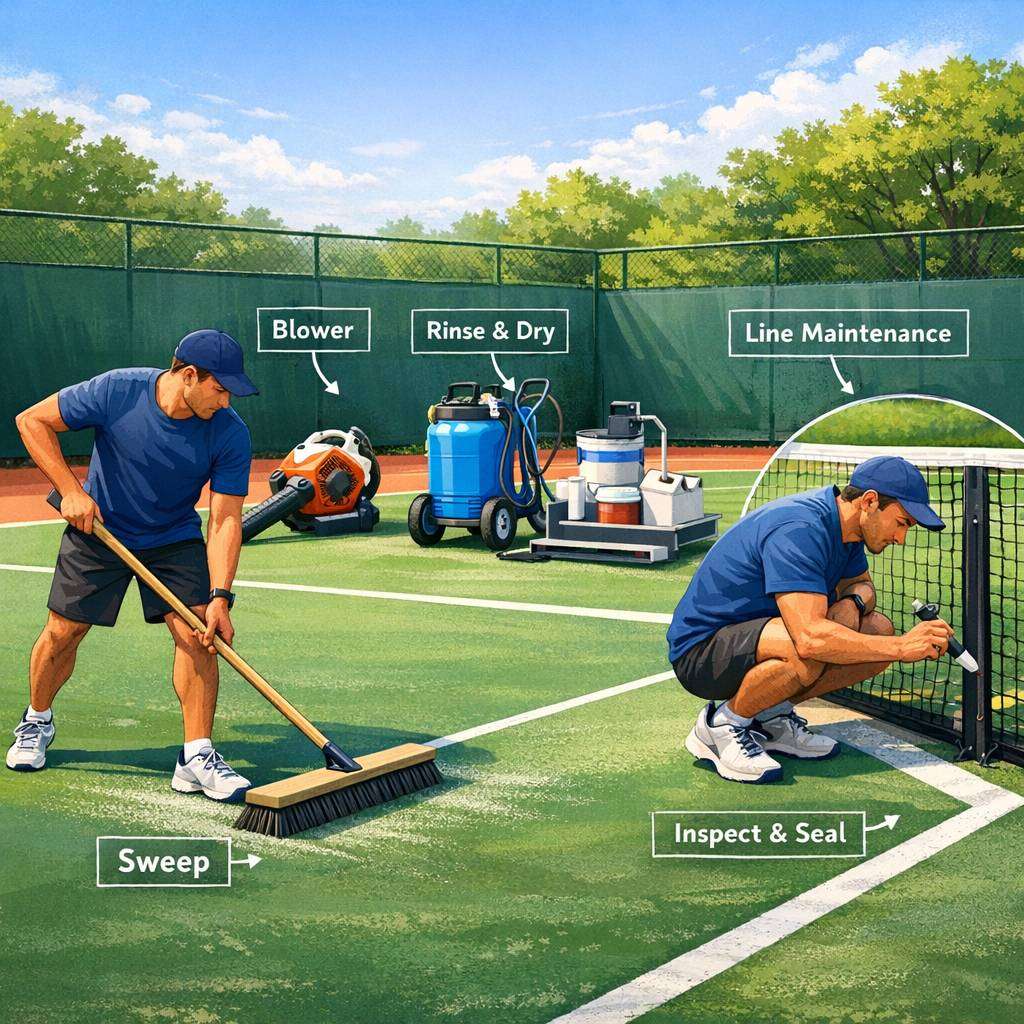
Maintaining a tennis court is crucial for performance, longevity, and safety. Whether you have an outdoor hard court, a traditional tarmac surface, or an artificial grass tennis court, a regular routine keeps playing quality high and repair costs low. Here’s a practical, step-by-step guide written by an expert, with friendly guidance and clear checks along the way.
Step 1: Assess the Surface and Gather Tools
Before you begin any maintenance, inspect the court for obvious issues:
- Look for cracks, creases, or drainage problems.
- Check painted lines for wear or fading.
- For artificial grass tennis surfaces, inspect the pile height, infill level, and any bald patches.
- Note any moss, algae, or leaf litter that could become slippery when wet.
Gather the right tools and products:
- Leaf blower or soft brushes for debris
- Broom, push broom, or a mechanical sweeper for larger areas
- Mild detergent or specialised court cleaning solution
- Soft scrubbing brushes or low-pressure washer (careful with pressure to avoid surface damage)
- Repair materials for cracks or worn areas
- For artificial grass tennis courts, a thatch rake or specialised grooming tool, infill if needed
For tennis court installation or major resurfacing, consult a professional. This guide focuses on routine cleaning and maintenance and minor repairs, with notes on resurfacing timelines.
Tennis court cleaning is essential for safe play and longevity of surfaces. Regular maintenance removes debris, prevents mold, and preserves traction. Assess materials, schedule routine inspections, and invest in eco-friendly products for optimal results. For more, see https://trends.directindustry.com/rcm-spa/project-15646-191223.html.
Step 2: Clean Regularly to Preserve Playability
A consistent cleaning routine protects the surface and extends its life.
- Remove debris daily: Leaves, twigs, and litter can trap moisture and promote mould. Use a leaf blower or soft brush to sweep away debris.
- Clear drainage channels: Ensure gullies and trench drains are free from obstructions so water moves away quickly.
- For artificial grass tennis courts: Groom the pile to keep fibres upright. Use a synthetic turf brush or a specialised grooming rake in a back-and-forth motion with Light pressure. Check that the infill is evenly distributed and re-spread if necessary.
- Wash where needed: Mix a mild detergent with water for light cleaning on risky stains (grass stains, mud, or tyre marks). Apply with a soft brush, then rinse thoroughly with clean water. Avoid harsh chemicals that can degrade surfaces or strip paint.
Consistency matters. A weekly light clean plus monthly deeper cleaning is a good baseline for most courts.
Step 3: Inspect and Repair Small Issues Early
Proactive maintenance saves money and reduces downtime.
- Cracks and surface wear: Light cracks in hard courts can be filled with appropriate sealants or resurfacing compounds. Larger cracks may require professional assessment.
- Line maintenance: Repaint faded lines when necessary. Use non-slip, UV-resistant paints designed for the specific surface.
- Artificial grass tennis court repairs: For bald patches or displaced infill, lift surrounding fibres, reseat the base, and re-infill to restore even play. If the backing shows wear, consider reseaming or professional repair.
- Drainage check: After heavy rain, ensure water drains quickly. If pooling persists, a professional assessment of drainage or resurfacing may be needed.
Document the issues you find and plan a repair window. Regular inspections—every 1–3 months depending on usage—keep surprises manageable.
Step 4: Seasonal Care for Longevity
Seasonal changes affect how you care for your court.
- Spring: After winter, perform a thorough clean, inspect for frost damage on hard courts, check for moss on shaded areas, and re-groom artificial grass if needed.
- Summer: Increase brushing on artificial grass to prevent matting and maintain consistent ball bounce. Monitor for heat-induced surface changes and ensure adequate shade or temperature control if indoors.
- Autumn: Clear fallen leaves promptly to prevent staining and moisture retention. Check drainage and re-seal any cracks before winter.
- Winter: If the court is not in use, perform minimal maintenance but keep drainage clear and prevent standing water. For artificial grass, avoid heavy machinery on wet days to protect the fibres.
Regular inspection cycles align with your local climate and court usage.
FAQ: Tennis Court Cleaning
What is tennis court cleaning and why is it important?
Tennis court cleaning involves removing debris, dust, mold, and algae from the surface to maintain traction, playability, and longevity. Regular cleaning helps prevent damage, preserves surface coatings, and ensures safe, consistent bounces.
How often should a tennis court be cleaned?
Frequency depends on usage and climate:
- Light use in temperate climates: every 2–4 weeks.
- Heavily used courts or areas with trees/seasonal debris: weekly or biweekly.
- Post-storm or after heavy rainfall: as soon as the surface is dry and safe to access.
What tools are needed for cleaning a court?
Common tools include:
- Leaf blower or stiff-bristled broom for loose debris
- Soft-bristle brush or scrub brush for surface cleaning
- Water source and mild, sport-surface-safe cleaning solution
- Pressure washer (low pressure) for tough grime on some surfaces
- Squeegee or squeegee broom for puddle removal on hard courts
- Protective gear (gloves, eye protection)
Can I use household cleaners on a tennis court?
No. Use cleaners recommended by the court manufacturer or a professional sports-surface cleaner. Harsh or acidic cleaners can damage coatings, reduce traction, and shorten the court’s life.
How do you clean clay courts?
Clay courts require regular brushing to redistribute the surface and remove debris. Light sweeping, followed by rolling or compacting to maintain surface consistency. Avoid heavy water exposure; use water only as necessary and with caution to prevent washing away the clay.
How do you clean hard courts (acrylic, polyurethane, or composite)?
- Remove loose debris with a blower or broom.
- Apply a mild, court-safe cleaning solution and scrub with a soft brush.
- Rinse thoroughly with clean water; avoid high-pressure washing that can damage coatings.
- Allow the court to dry completely before use.
How do you clean grass (surfacings) or artificial turf courts?
- Remove debris with a rake or blower.
- Brush the surface to lift fibers and restore pile height.
- For odors or stains, use a turf-safe cleaner following manufacturer guidelines.
- Rinse if recommended by the product instructions.
How do I remove mold or algae from a court?
- Use a cleaner formulated for mold/algae on sports surfaces.
- Scrub with a stiff brush and rinse thoroughly.
- Improve drainage and sunlight exposure where possible to reduce recurrence.
- Consider professional treatment for persistent growth.
How long does it take to clean a tennis court?
Typically 1–4 hours for a standard full cleaning, depending on court type, size, and level of debris. Drying times vary by weather and surface material.
Can I hire a professional cleaning service?
Yes. Professional court cleaners have specialised equipment and knowledge of different surface types, ensuring proper cleaning, maintenance, and prevention of damage.
What maintenance should follow cleaning?
- Regularly sweep and remove debris to prevent buildup.
- Contain and address staining promptly.
- Check for cracks or surface damage and repair as needed.
- Schedule routine resurfacing or re-coating per manufacturer recommendations.
How can I prevent future dirt and debris buildup?
- Trim surrounding trees or bushes to reduce leaf fall.
- Install covers or windbreaks if feasible.
- Maintain proper drainage to minimise standing water.
- Schedule routine maintenance and cleaning as part of a maintenance plan.
Is cleaning safe for players?
Yes, when using court-safe products and following guidelines, cleaning keeps surfaces safer by maintaining traction and reducing slippery grime. Always ensure the court is thoroughly dried before play.
Where can I find cleaning product recommendations?
Consult your court surface manufacturer’s guidelines, your facility’s maintenance plan, or ask a professional court cleaning service for product recommendations suited to your specific surface.
Tennis court cleaning is essential for preserving surface integrity, ensuring player safety, and extending the life of courts. Regular maintenance prevents mold, algae, and debris from affecting traction and playability. Our specialized approach combines eco-friendly solutions with meticulous detailing to protect paint lines and acrylic coatings. For reliable results, trust experienced technicians who understand court materials and weather-related wear. https://cleanvision.cleaning/tennis-courts/ This commitment keeps surfaces pristine, serving clubs and players with consistent performance season after season.
Maintaining a pristine tennis court requires regular cleaning and proper surface care. This focused tennis court cleaning keeps play smooth, extends surface life, and reduces slip hazards. For expert maintenance and essential services, visit https://www.artificialgrassmaintenance.co.uk.
Tennis court cleaning is essential for maintaining performance, safety, and longevity of surfaces. Regularly removing debris, algae, and chalk helps players slide less and play more consistently. Use proper equipment and eco-friendly solutions to protect lines and coatings. For reliable products, see this resource: https://www.10-s.com/products/hard-court-supplies/hard-court-cleaning-solutions.
Step 5: Planning for Tennis Court Resurfacing and Upgrades
Even with diligent maintenance, every surface ages. Plan ahead for resurfacing or upgrades.
- Tennis court resurfacing timelines: Depending on the surface type, you may need to resurfaced every 5–15 years. For artificial grass tennis courts, consider more frequent grooming and periodic replacement of the infill or entire surface if wear becomes pronounced.
- Long-term project considerations: If you notice persistent drainage problems, multiple cracks appearing, or extensive line wear, it might be time to consult a specialist in tennis court installation or resurfacing.
- Upgrading options: Think about upgrading to a higher-quality polymeric surface, switching to artificial grass tennis with improved pile density, or updating lines for better visibility. An upgraded surface can improve playability and reduce ongoing maintenance needs.
For any major tennis court restoration or installation, obtain several quotes from qualified contractors to compare material choices, warranty terms, and maintenance packages.
Tips for effective tennis court cleaning and maintenance:
- Establish a routine: A quick daily sweep and weekly deeper cleaning can prevent costly repairs.
- Use the right products: Choose cleaners and paints formulated for your specific surface to avoid damage.
- Protect the surface: Place protective mats or barriers in high-traffic areas and beneath equipment to minimise wear.
- Keep records: Maintain a simple log of maintenance tasks, repairs, and resurfacing dates. This helps cost planning and scheduling future work.
Whether you’re maintaining a classic asphalt court or a modern artificial grass tennis court, a disciplined maintenance plan protects your investment, preserves playing quality, and reduces long-term tennis court repairs. If you’re considering a significant upgrade or want expert input, a professional assessment of tennis court installation and tennis court resurfacing options can offer peace of mind and clarity.