
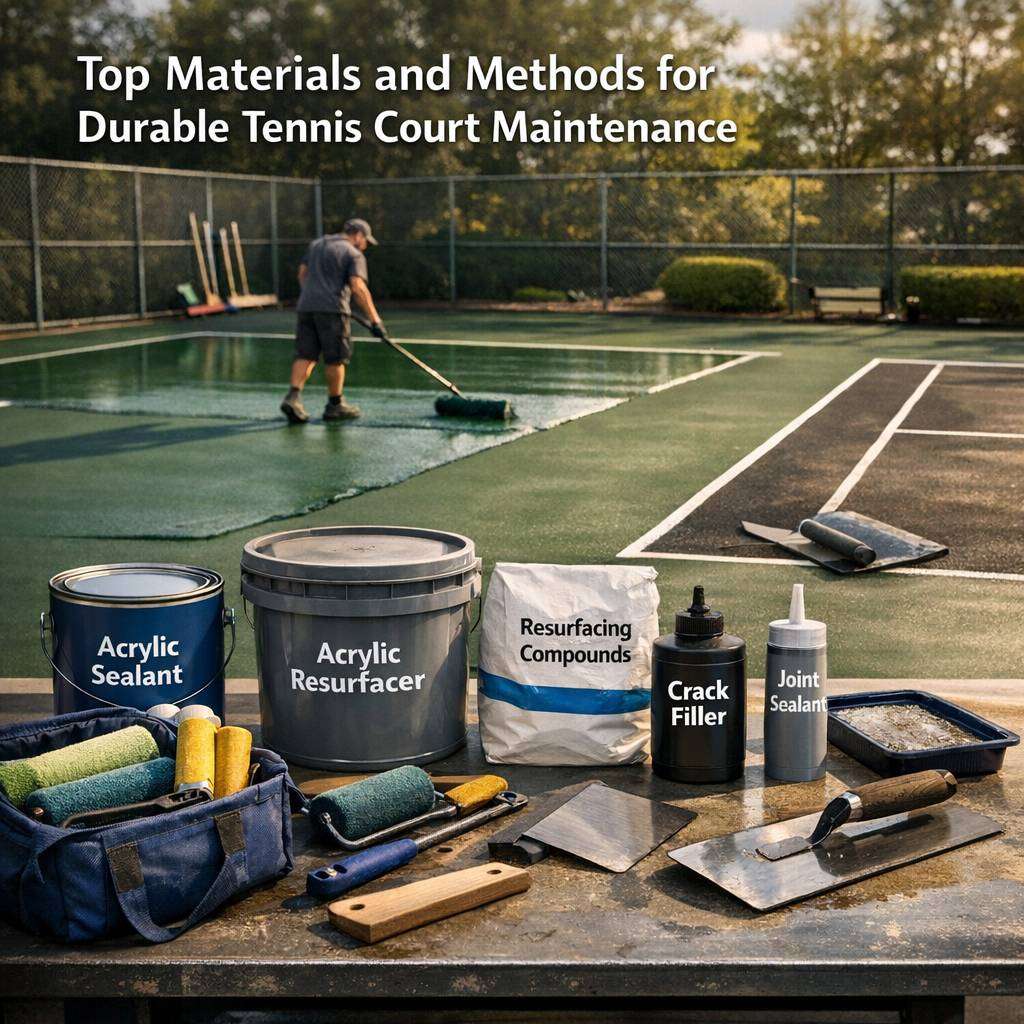
Maintaining a top-notch playing surface requires regular inspection, debris removal, and proper drainage to prevent soggy courts. Consistent line marking, racket-friendly friction, and timely repairs extend the life of your facility and keep players safe. Effective maintenance also preserves aesthetic appeal and resale value. For expert guidance and professional services, visit the second half of this message: artificialgrassmaintenance.co.uk
Tennis courts are a significant investment, and their longevity depends as much on the quality of maintenance as on initial construction. A well-planned routine preserves playability, safety, and surface aesthetics, reducing the need for costly repairs down the line. In this guide, we explore trusted materials and proven methods that professionals rely on for durable tennis court maintenance, with practical tips for court managers, clubs, and dedicated enthusiasts.
For many facilities, the choice of surface type drives maintenance strategies. From traditional asphalt or concrete courts to modern artificial grass tennis courts, each substrate demands specific care to withstand wear from footfall, weather, and rigorous play. Understanding how materials interact with environment and usage is key to extending life, minimising downtime, and ensuring a consistent playing experience.
An informed approach to tennis court maintenance also supports optimal performance during tennis court resurfacing. Whether addressing colour wear, loss of elastomeric properties, or drainage concerns, selecting the right materials and methods can make resurfacing projects smoother, quicker, and less disruptive to users.
Materials for durable surfaces
- Surface coatings and sealants: For asphalt or concrete bases, high-quality sealants and resins are essential. They protect against water penetration, reduce surface cracking, and provide a uniform playing texture. Modern coatings often incorporate UV stabilisers and anti-slip additives to maintain surface integrity in bright sun and wet conditions.
- Acrylic and elastomeric toppings: These coatings offer durability, bounce consistency, and colour fastness. They are designed to handle freeze-thaw cycles and resist weathering. A well-chosen acrylic system helps preserve the court’s aesthetics while maintaining predictable ball responses.
- Resin-bound or bonded aggregates: In some court types, especially multipurpose or outdoor facilities, resin-bound surfaces provide a robust, low-maintenance finish with good permeability. Properly installed, they resist rutting and offer dependable drainage.
- Artificial grass components: For artificial grass tennis court installations, the choice of a suitable tufting density, pile height, backing material, and infill is critical. The right combination supports ball bounce, traction, and longevity, while resisting matting and deformation under heavy use.
- Infill materials: Depending on the system, silica sand, rubber crumb, or a combination is used to maintain fibre stability and performance. The particle size and angularity influence vertical stiffness, surface firmness, and infill settlement over time.
- Drainage systems: Efficient drainage is paramount. Perimeter channels, internal gullies, and proper gradient ensure rapid water removal, reducing surface flaws and downtime after rain. A well-designed drainage plan is integral to long-term performance.
Key maintenance methods
- Regular cleaning and debris removal: Consistent tennis court cleaning minimises abrasive wear from leaves, dust, and litter. A routine sweep and gentle washing help maintain surface texture and colour uniformity. For artificial grass tennis court surfaces, remove debris that can cause matting or harbour pests.
- Brushing and line maintenance: For artificial grass surfaces, brushing aligns fibres and keeps pile upright, preserving ball bounce and surface uniformity. Regular line marking maintenance ensures clear boundaries and safety during play.
- Inspection and early repair: Adopting a proactive inspection routine allows technicians to identify micro-cracks, edge delamination, or drainage blockages before they escalate. Early intervention can dramatically extend the life of materials and reduce resurfacing frequency.
- Resurfacing planning and execution: Tennis court resurfacing should be scheduled based on surface wear, climate exposure, and usage patterns. A professional resurfacing project typically involves cleansing, crack repair, primer application, and the appropriate coating or topping system. For artificial grass tennis, resurfacing may focus on replacing worn infill, re-tufting, or upgrading backing and drainage components.
- Cleaning protocols for varying surfaces: Concrete or asphalt courts require gentle detergents, non-abrasive scrubbers, and rinse cycles to avoid edge damage. Artificial grass tennis court cleaning benefits from specialised equipment that lifts infill and cleans fibres without over-saturation.
- Protective maintenance during adverse weather: In colder climates, protect surfaces from freeze-thaw damage by ensuring proper drainage and applying suitable sealants. In hot, sunny environments, use UV-stable coatings and consider shade management to mitigate excessive heat exposure.
Best practices for different court types
- Artificial grass tennis court: Prioritise infill maintenance and fibre alignment. Regularly check drainage outlets and ensure edge integrity to prevent grass from lifting at the margins. Brushing and grooming the surface maintains consistent bounce and reduces erosion of fibres.
- Tennis grass court maintenance: For grass-based courts, mowing, fertilisation, aeration, and topdressing support growth and resilience. While not as common in all-club settings, well-kept grass courts deliver excellent playability with proper scheduling and anti-compaction measures.
- Traditional hard courts: Maintain structural integrity of the base with crack repair, proper sealing, and resurfacing cycles. A stable, well-sealed surface reduces dusting and provides uniform ball response.
- Multi-surface facilities: For complexes hosting different surfaces, develop a harmonised maintenance calendar that aligns with the specific needs of each court type. This includes compatible cleaning agents, scheduling of resurfacing windows, and cross-department coordination to minimise downtime.
Tennis court installation and long-term planning
When planning tennis court installation or major refurbishment, select materials with proven performance in local climate and usage patterns. Seek systems that offer warranty coverage, environmental compatibility, and compatibility with field-testing data. Engaging experienced installers and scheduling regular maintenance reviews from the outset can yield cost savings and extend the court’s service life.
Maintenance records are essential. Document surface types, coatings, cleaning methods, and frequency of interventions. A transparent maintenance log enables timely decision-making about resurfacing intervals, infill replacement, or upgrades to more durable materials. By adopting a science-based approach to tennis court maintenance, facilities can deliver high-quality, reliable playing surfaces year after year.